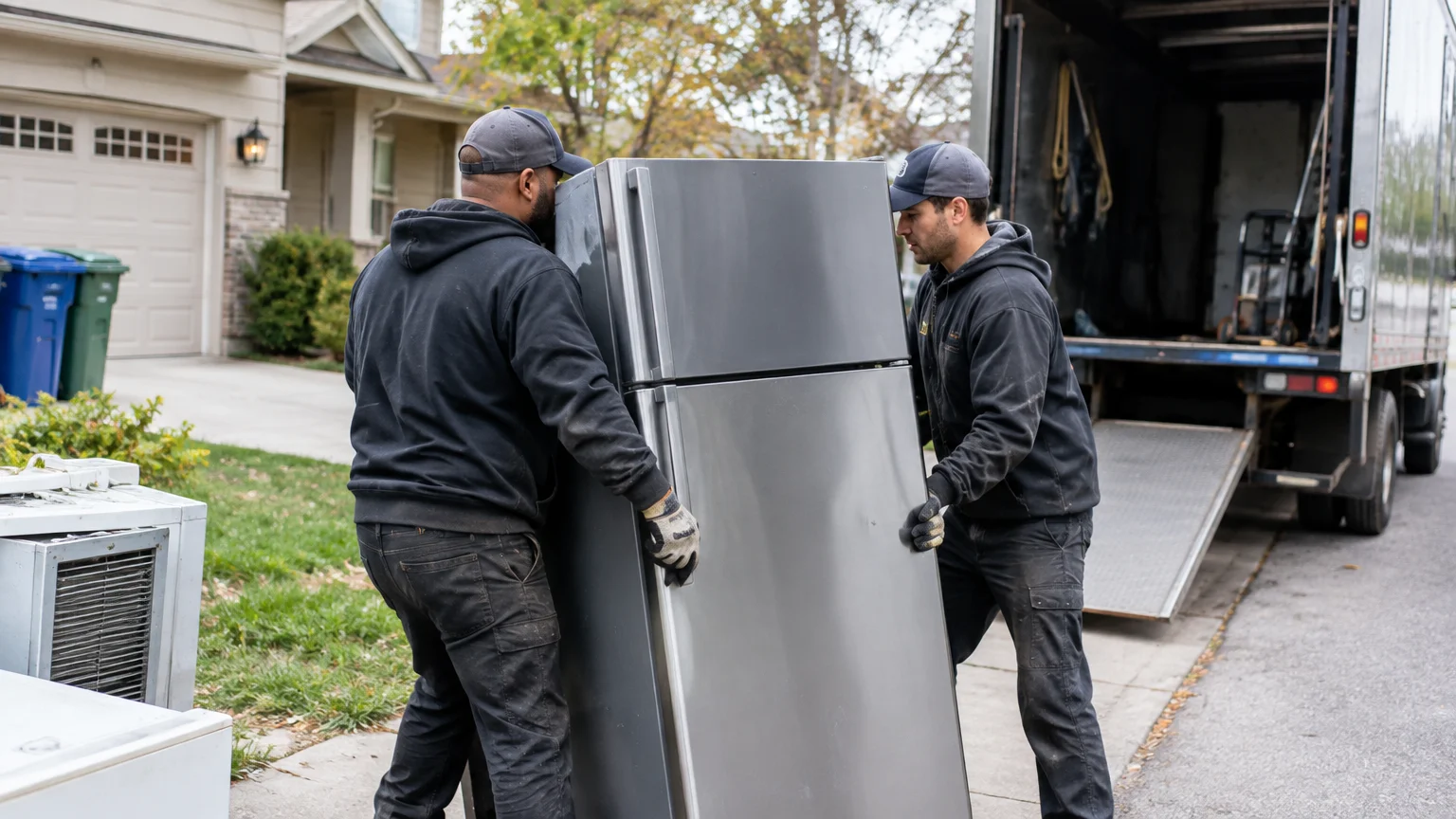
To schedule appliance pickup without delays, share the appliance type, size, location, access details, and preferred date first. Empty food, water, dishes, and loose parts before the visit. A clear path and safe utility disconnection help remove refrigerators, washers, dryers, stoves, and dishwashers with less stress.
What information do you need to schedule appliance pickup?
To schedule appliance pickup, the provider needs clear details about the item and property. This helps the team plan the right vehicle, tools, and crew. It also helps prevent problems when an appliance sits in a tight space or behind a gate.
Renton Junk Removal helps Renton homeowners, landlords, office managers, and property professionals plan their pickup requests. A short item description is helpful, but photos may show the space more clearly. Tell the provider if the appliance is inside a home, in a garage, on a porch, or outside.
Which appliances can typically be collected?
Most appliance pickup services collect large household appliances. Common items include refrigerators, freezers, washing machines, clothes dryers, stoves, ovens, ranges, and dishwashers. Some providers may also take small appliances, water heaters, or commercial equipment. This depends on local rules and the service area.
Mention unusual items before booking. A large commercial freezer, built-in oven, or basement appliance may need more planning. The same is true for appliances at an office, rental property, storage space, or building site. Sharing these details early lets the provider confirm whether the item fits the service.
What details should you share before pickup day?
Share the appliance type, size, quantity, floor level, and removal location. The provider should also know about stairs, narrow doors, elevators, long paths, locked gates, and parking limits. Explain if the appliance is built into cabinets or connected to special lines.
A useful pickup request includes:
- The appliance brand and type, if known
- The number of items ready for removal
- The room or outdoor area where each item sits
- Stairs, tight turns, gates, elevators, or parking limits
- Whether the appliance is empty, disconnected, and ready to move
- Photos showing the item and its path to the vehicle
Renton includes homes, rental properties, businesses, and other local spaces. The main Renton area reaches from Renton Highlands and The Landing toward Tukwila, Newcastle, Kent, Issaquah, and nearby communities. Clear details help Renton Junk Removal plan a safer visit across these areas.
How should you prepare appliances for pickup?
Appliances should be empty, clean enough to handle, and disconnected by a trained person when needed. Homeowners can usually remove food, clothing, dishes, shelves, and loose parts themselves. Do not cut gas lines, electrical wires, water lines, or refrigerant tubing without proper training.
Good preparation helps protect the property, crew, and people nearby. It also lowers the chance that an item must stay behind because it remains connected to a utility line. The provider can explain what should happen before arrival.
How do you disconnect and empty refrigerators, washers, and dishwashers?
Empty food and drinks from refrigerators. Remove or secure shelves and bins. Unplug the unit only when safe, and keep the doors closed or secured during movement. Refrigerant is a chemical that helps a cooling system make cold air. Refrigerators and freezers may need special handling because of it.
Empty the washer and let it drain. Someone who understands the water shutoff should disconnect the hoses. Empty the dishwasher, then have a qualified person disconnect its power and water when needed. Towels or a shallow container can catch small amounts of leftover water.
Dryers and stoves need care as well. Electric units should be disconnected safely. Gas appliances should be shut off and disconnected by a qualified professional. Never force a gas fitting or cut a power cord to make removal faster.
What access and safety issues should you check?
Clear the path from the appliance to the pickup area. Move boxes, rugs, toys, small furniture, and other trip hazards. Keep children and pets away from the work area. Check that doors open wide enough and that halls have room for careful movement.
Tell the team about steps, uneven ground, wet surfaces, loose railings, and low ceilings. An appliance may seem easy to move until it reaches a sharp turn or narrow doorway. If a door, cabinet, or railing must come out, ask about it before pickup day.
How do appliance pickup rules vary by appliance type?
Appliance disposal rules depend on the item, its parts, and local needs. Cooling appliances often need different care from washers, dryers, stoves, and dishwashers. A responsible appliance recycling service separates reusable metal and other materials when possible.
Rules may differ by county, utility program, transfer station, and waste facility. Renton Junk Removal can explain the usual removal process for customers in the surrounding Renton area. Ask the provider about any special handling before the appointment.
What should you know about refrigerators and other cooling appliances?
Refrigerators, freezers, and some window air conditioners may contain refrigerant. Do not puncture, drain, or take apart a cooling appliance. Check local rules or ask the pickup provider how the unit should be handled before recycling or processing.
Do not place a refrigerator beside the curb unless local instructions allow it. The provider may ask if the unit is sealed, damaged, or missing parts. This information helps the team choose the right handling method.
Old freezers and refrigerators can often be collected through appliance removal services, local recycling programs, or utility programs. The best option depends on the item and local rules. A provider can explain whether the appliance may be reused, recycled, or sent through another approved route.
How are washers, dryers, stoves, and dishwashers handled?
Washers, dryers, stoves, ovens, and dishwashers often contain metal and other recyclable parts. They may go to a recycling facility after safe removal. Appliances with gas connections, broken glass, sharp edges, or heavy parts need extra care.
A stove or dryer with a gas connection should be handled after the gas supply is safely shut off. Report a broken oven door or cracked cooktop before pickup. Washers and dishwashers may hold water, which can leak during loading if they are not drained.
Businesses and rental property owners should mention several appliances at once. A property turnover, office update, or cleanout may include other items too. A junk removal provider can help separate appliance removal from furniture, boxes, or renovation debris.
How can you prevent delays on appliance pickup day?
The best way to prevent delays is to confirm the item list, access route, utility status, and pickup window. Keep the appliance in the agreed location unless the provider confirms an inside removal. Clear communication matters when a property has stairs, tenants, security rules, or limited parking.
A quick check the day before can catch missing details. It also gives the property owner time to finish safe preparation or ask questions. This helps at commercial spaces and rental homes where another person may need to provide access.
What should you confirm with the pickup provider?
Confirm which appliances are included and where they are located. Ask if the team can remove items from inside the property. Also ask whether doors or gates must be unlocked and whether someone must be present. The pickup window and property instructions should be clear.
Before the visit, confirm:
- The full list of appliances ready for collection
- The location of each item inside or outside the property
- Any stairs, elevators, narrow doors, gates, or parking limits
- Whether each appliance is empty and safely disconnected
- Any broken glass, leaks, sharp edges, or unstable parts
- Who will provide access if the property is occupied or managed remotely
A reminder can prevent a failed visit caused by a locked gate, missing appliance, or unsafe connection. It also helps the crew protect walls, floors, doors, and other property features.
What happens when an appliance cannot be safely removed?
A pickup provider may leave an appliance in place if it is connected to gas, trapped in a structure, leaking, unstable, or blocked by unsafe conditions. This protects people and property. The provider should explain what must change before removal can continue.
A homeowner may need a qualified electrician, plumber, gas technician, or appliance repair worker first. The provider may also suggest clearing the path, securing pets, repairing a damaged doorway, or arranging building access. Do not pressure a crew to move an unsafe appliance.
Key takeaways
- Share the appliance type, quantity, size, location, and access details early.
- Empty refrigerators, washers, dryers, stoves, and dishwashers before pickup.
- Use a qualified professional for gas, electrical, water, or refrigerant connections.
- Keep paths clear and report stairs, gates, tight turns, leaks, and broken parts.
- Confirm the item list and access plan before pickup day.
Frequently Asked Questions
Who takes old freezers?
Junk removal companies, appliance recyclers, transfer stations, and some local programs may take old freezers. Keep the freezer intact unless a qualified professional has prepared it. The provider may ask whether it is empty, accessible, and still sealed. Local rules can affect the right disposal or recycling option.
Can a pickup team remove an appliance from a basement?
A pickup team may remove an appliance from a basement if the stairs, doorway, and route are safe. Describe the stairs, turns, ceiling height, and appliance size before booking. Photos can help the provider review the path. Unsafe or blocked access may need preparation before removal.
Should a homeowner disconnect an old gas stove?
A homeowner should not disconnect a gas stove without proper training. The gas supply must be shut off safely, and the connection must not be forced or cut. A qualified gas professional can prepare the appliance before the pickup team arrives.
Can a pickup service recycle appliances?
Many pickup services send appliances to recycling or approved disposal facilities when possible. Metal, wiring, and other materials may be separated after safe processing. Refrigerators and freezers need special care because of refrigerant. Ask how the provider handles each appliance type before collection.
Conclusion
Good preparation makes appliance pickup easier for everyone. Share clear details, empty each appliance, protect the access path, and arrange safe disconnection when needed. Renton Junk Removal helps property owners plan appliance removal for homes, rentals, offices, and commercial spaces.
Contact us to arrange appliance pickup with Renton Junk Removal.