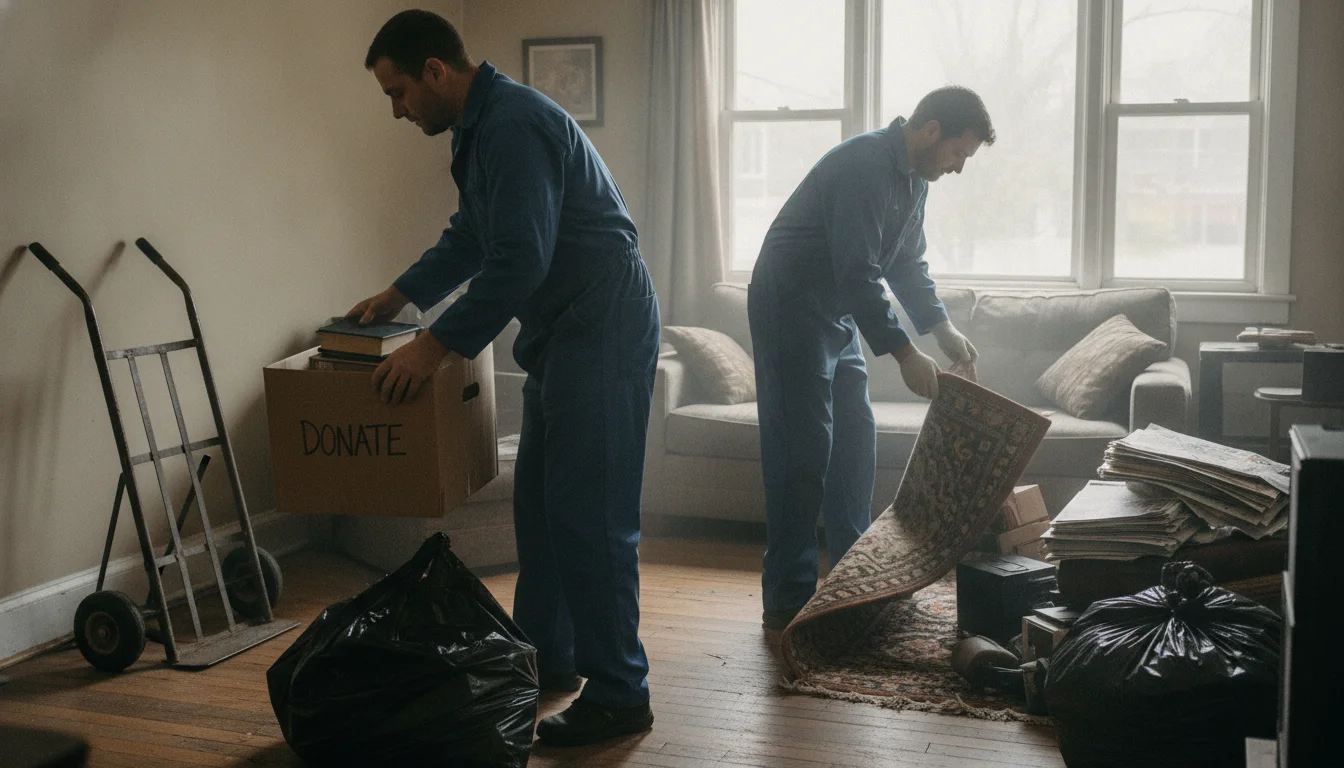
Your home is full, the clock is ticking, and you want a clear plan. Many people in Renton search for junk removal near me and still feel unsure. This house cleanout FAQs guide breaks down costs, timelines, and what stays versus what goes so you can move forward with confidence. A house cleanout is the full removal of unwanted items from a home or outbuildings by a trained crew that sorts, loads, and hauls for donation, recycling, or disposal.
Key Takeaways
- A house cleanout means professionals remove unwanted items and handle donation, recycling, and disposal for you.
- Quotes depend on volume in the truck, labor, access, and disposal requirements—home layout and item type matter.
- Scheduling can be same-day or next-day when available; most projects range from a few hours to a full day depending on size.
- Crews can donate usable goods and recycle materials; hazardous items follow King County rules and may need special drop-off.
What Is a House Cleanout?
A house cleanout is the complete removal of items from spaces like a home, garage, attic, basement, or yard. A professional team does the sorting, lifting, loading, and hauling—directing items to donation centers, recycling facilities, or approved disposal sites to keep the process safe and efficient.
Costs and Pricing for a House Cleanout
What Affects Your Quote
Cleanout quotes reflect how much space your items take in the truck, the labor needed to carry them out, how easy access is, and the type of disposal required. Stairs, tight halls, and long carries add time. Heavy or specialized items—such as pianos, safes, or commercial-grade equipment—may require extra labor or tools.
Real-World Examples
Homes vary, so costs vary. A light studio with a few bulky items is very different from a two-story home with an attic and shed. For context, junk trucks commonly hold about 12–20 cubic yards of material. A single sofa and a few boxes might take a partial load, while a fully furnished home with closets, attic contents, and patio sets can take multiple loads and most of a day. Your quote reflects total volume and the on-site work required.
Full-Service vs. Dumpster Rental
Many compare full-service cleanouts to renting a dumpster. A dumpster rental means you handle the loading, may need a permit, and must protect your driveway. A full-service crew does the lifting, sorting, and hauling, then sweeps up before leaving. It’s hands-off for you and often faster—especially when time and extra help are limited.
Ways to Reduce Your Bill
Group items in central spots, break down small furniture, and have everything ready to go. Clear labels for keep, donate, and discard save time. Sharing photos or a quick video beforehand helps your crew provide a tighter estimate and plan truck space effectively.
Scheduling and Timeline: How Long Does It Take?
How Scheduling Works
Most cleanouts start with a short conversation and clear photos or an on-site look. Same-day or next-day pickups are sometimes possible, and planned projects can be scheduled to match your move-out or listing date. Renton Junk Removal keeps timelines transparent and flexible so you can coordinate with cleaners, movers, or real estate showings.
Crew Size and Duration
Crew size depends on your space and goals. A small apartment may take a few hours with a two-person team. Larger homes with basement and attic areas can take most of a day with a bigger crew. Tight access, detailed sorting, or special handling can add time—share those details early so the plan fits your schedule.
On Cleanout Day
The team arrives within a scheduled window, walks the space with you, and confirms the plan. Floors and doorways are protected when needed. The crew works room by room, checks in with you if questions arise, and keeps a steady pace. When the truck is full, they secure the load and head to designated donation, recycling, or disposal sites.
Final Walkthrough
After loading the last items, there’s a final walkthrough. The crew sweeps floors and leaves clear paths. You confirm each area is done and that keep items stayed in place.
What Stays, What Goes, and What We Can't Take
Items We Take
Most household items can go: sofas, tables, mattresses, dressers, TVs, computers, appliances, rugs, clothing, toys, and boxed items from the garage or attic. Yard debris in bags, branches cut to size, and fencing sections are also common.
Items We Can't Take
Some items are restricted by local and county rules. Hazardous materials—like wet paint, solvents, fuels, asbestos, and medical waste—require special handling. Propane tanks, certain batteries, and chemicals often need drop-off at approved King County facilities. If an item can’t be hauled, your crew will point you to safe options.
Donation and Recycling
Usable goods can be donated, and many materials—such as metal, cardboard, and certain electronics—can be recycled. Crews often sort as they load to minimize landfill disposal. If you want donation receipts when available, mention it during the walkthrough so routes can be planned accordingly.
Keep and Sensitive Items
Set aside documents, photos, and keepsakes before work begins. Use a lidded bin with a clear “Do Not Remove” note. If you’re unsure about something, ask the team to pause so you can decide. For sensitive paperwork, plan to shred or store it in a locked tote that stays with you.
How to Prepare Your Home for a Smooth Cleanout
Create Clear Zones
Set up simple zones: a keep area, a donate pile, and a discard section. Use tape and notes so everyone knows what goes where. This prevents mix-ups and keeps the work moving.
Make Access Easy
Clear walkways to doors, stairs, and the driveway. Reserve parking close to the entrance when possible. Share elevator details, gate codes, pet notes, or quiet hours so arrival and access are smooth.
Share Details Early
Send photos or a short video beforehand for a tighter estimate. Flag heavy or tricky items—like a treadmill in the basement or a large curio cabinet upstairs. If the home is vacant, explain key pickup or how to meet your agent.
After the Job
Keep any donation receipt for your records. Ask for before-and-after photos if you need to show progress to a landlord, agent, or family. Plan next steps, such as Residential Junk Removal for lingering items, a quick deep clean, or booking an Attic & Basement Cleanout if you saved those spaces for later.
Local Service You Can Trust
A smooth cleanout is easier with a local team that knows Renton and King County guidelines for disposal and donation. Renton Junk Removal works across Renton every week—including neighborhoods like the Highlands, Kennydale, and Benson Hill—and can help with House Cleanout, Estate Cleanout, and Commercial Junk Removal when you change spaces. We also answer office cleanout FAQs and retail removal FAQs for businesses planning a transition. Ready to make a plan with a friendly crew that does the heavy lifting while you direct the flow? Contact us.